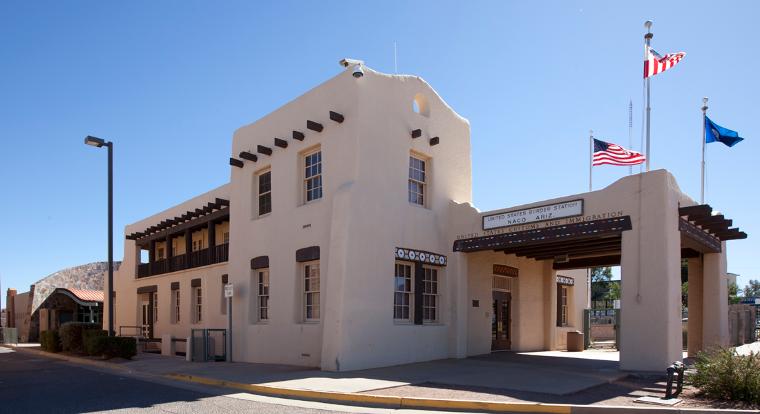
The Naco U.S. Border Inspection Station is an outstanding example of Pueblo Revival design. Pueblo Revival is a uniquely American regional style inspired by the architecture of southwestern Native Americans and Spanish Colonialism. Authors John Burchard and Albert Bush-Brown in “The Architecture of America” document the popular interest in the 1920s and 1930s in the design traditions of native peoples from other areas of the Americas, such as Mayans and Aztecs, which somehow also managed to look contemporary. One architectural critic of the period even wrote, “The Indians were the first cubists in this country.” The style became popular in Colorado, Arizona, New Mexico, and eventually California. Both tourist attractions and university buildings of this era employed Pueblo Revival style, many of which can still be seen today. Santa Fe, New Mexico, remains a Pueblo Revival stronghold.
This Naco border station is unique among the historic border stations for its style.
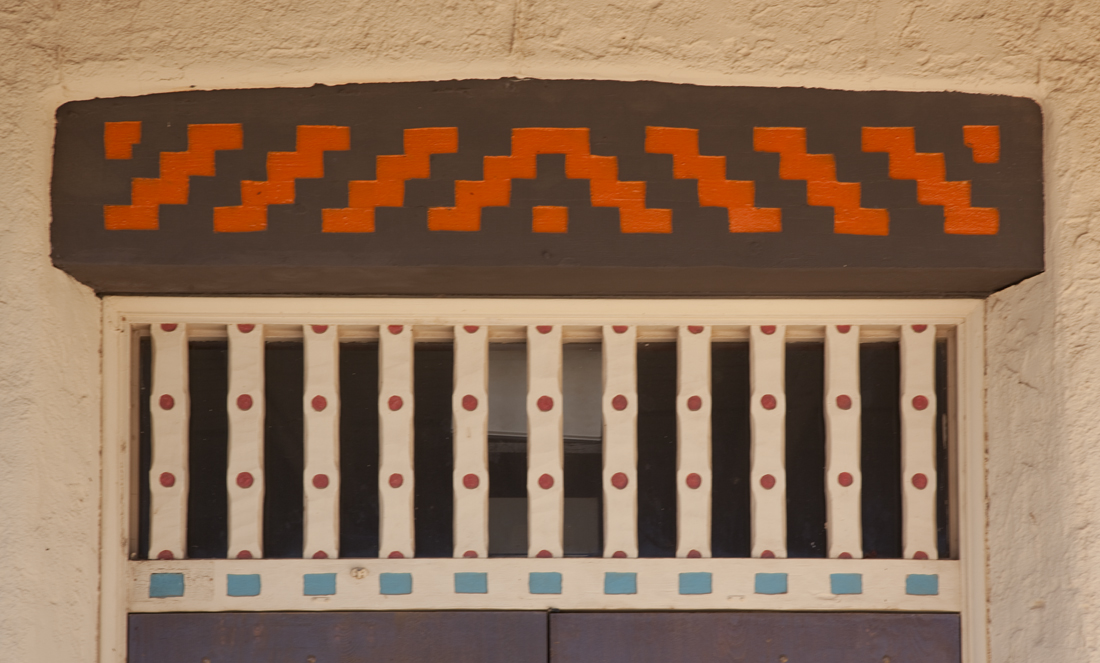
Detail from the Naco Border Station
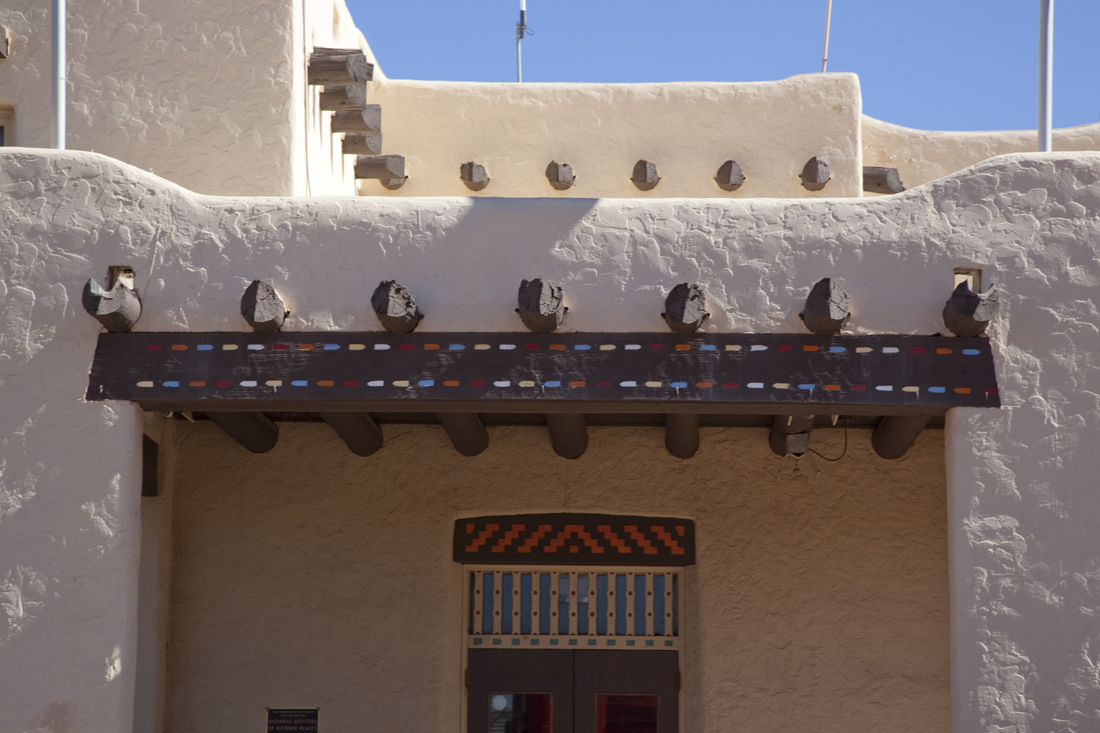
Wide angle detail from the Naco Border Station
Note the vigas (projecting wooden roof beams)
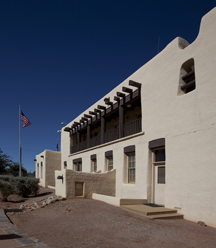
Rear view of Naco Border Station
Note details of flat roof, adobe materials


 U.S. General Services Administration