Countdown to America's 250th Anniversary: 154 days

close

An official website of the United States government

Here’s how you know

Official websites use .gov
A .gov website belongs to an official government organization in the United States.

Secure .gov websites use HTTPS
A lock ( Lock A locked padlock ) or https:// means you’ve safely connected to the .gov website. Share sensitive information only on official, secure websites.

GSA 250 year anniversary logo and seal U.S. General Services Administration
    • Explore buy through us
    • Category management
    • Government property for sale or lease
      Toggle submenu
      • Personal property (tangible goods)
      • Real property (real estate and buildings) for public use
      • Vehicle sales
    • Products and services
      Toggle submenu
      • Human capital
      • Industrial products and services
      • Office management
      • Professional services
      • Security and protection
      • Transportation and logistics services
    • Purchasing programs
      Toggle submenu
      • Assisted acquisition
      • Commercial platforms
      • Federal strategic sourcing initiative
      • Fleet management
      • Governmentwide acquisition contractors
      • HCaTS and HCaTS SB
      • Multiple award schedule, or MAS
      • OASIS and OASIS SB
      • Requisition programs
      • State and local programs
      • Emergency acquisition basic ordering agreements
    • Shared services
      Toggle submenu
      • Payroll services
      • Support services for CABs

    Featured Topics

    • Auctions Federal assets available via auction to the general public.
    • Explore sell to government
    • Step 1: Learn about government contracting
      Toggle submenu
      • Ways you can sell to government
      • How to access contract opportunities
      • Conduct market research
    • Step 2: Compete for a contract
      Toggle submenu
      • Register your business
      • Certify as a small business
      • Become a schedule holder
      • Market your business
      • Research active solicitations
      • Respond to a solicitation
      • What to expect during the award process
    • Step 3: Manage your contract
      Toggle submenu
      • Comply with contractual requirements
      • Handle contract modifications
      • Monitor past performance evaluations

    Featured Topics

    • Contract opportunities on SAM.gov Search current federal contract opportunities and procurement notices.
    • Forecast of contracting opportunities Anticipated contracts offered by GSA.
    • Vendor support center Research the federal market, report sales, and upload contract information.
    • Explore real estate
    • Assets identified for accelerated disposition
    • Child care services
      Toggle submenu
      • Find a child care center
    • Explore historic buildings
      Toggle submenu
      • Explore by architectural style
      • Explore by timeline
      • Find a historic building
    • Leasing
      Toggle submenu
      • Leasing guidance
      • Leasing tools
    • Occupancy Agreement Space Inventory System, or OASIS
    • Reimburseable services program
      Toggle submenu
      • eRETA RWA customer portal
      • eRETA user account request process
    • Water quality management
    • Workplace optimization
      Toggle submenu
      • Answers to FAQs about Space Match
      • Commercial coworking
      • Offerings
      • Space Match
    • USE IT Act and occupancy data
      Toggle submenu
      • Playbook: Federal daily check-in survey
      • Playbook: Laptop occupancy data

    Featured Topics - Real Estate

    • Real property disposal Dispose or acquire excess federal real property including buildings or land.
    • Explore policy and regulations
    • Acquisition policy
    • Aviation management policy
    • Federal Advisory Committee Act management
    • Information technology policy
    • Real property management policy
    • Travel management policy
    • Regulations
      Toggle submenu
      • Federal acquisition regulations
      • Federal management regulations
      • Federal travel regulations

    Featured Topics

    • Forms Search for a government form.
    • Per diem FAQs Frequently asked questions about per diem rates and related topics.
    • Explore small business
    • Small business goals
    • Register your business
      Toggle submenu
      • Explore business models
      • Research the federal market
      • Subcontracting and other partnerships
    • Forecast of contracting opportunities
    • Small business resources
      Toggle submenu
      • Small business contacts
      • Videos

    Featured Topics

    • Forecast tool Information on planned federal contracting opportunities.
    • Socio economic categories Check your eligibility for small-business set-asides.
    • Training resources Suggested training for doing business with us.
    • Explore travel
    • Plan a trip
      Toggle submenu
      • Per diem rates
      • Transportation (airfare rates, POV rates, etc.)
      • Lodging
      • Travel charge card
    • Travel and lodging services
      Toggle submenu
      • E-gov travel service (ETS)
      • Rideshare
      • Travel category schedule
    • Federal travel regulation

    Featured Topics

    • Per diem rates look-up Allowances for lodging, meal and incidental costs while on official government travel.
    • Mileage reimbursement rates Reimbursement rates for the use of your own vehicle while on official government travel.
    • Explore technology
    • Purchasing programs
      Toggle submenu
      • Cloud computing services
      • Cybersecurity products and services
      • Governmentwide acquisition contracts
      • MAS information technology
      • USAccess
    • Government initiatives
      Toggle submenu
      • Artificial Intelligence
      • Cybersecurity
      • Emerging citizen technology
      • FedRAMP
      • Federal identity, credentials, and access management
      • Robotic process automation community
      • Technology modernization fund
    • Training

    Featured Topics

    • Challenge.gov Government sponsored challenges and prize competitions.
    • Data.gov Access U.S. government data.
    • Multiple award schedule IT category Information technology products, services and solutions.
    • Explore about us
    • Background and history
      Toggle submenu
      • Overview
      • Mission and strategic goals
      • Role in presidential transitions
    • Careers
      Toggle submenu
      • Get an internship
      • Launch your career
      • Elevate your professional career
      • Discover special hiring paths
      • Resources and related links
    • Events and training
      Toggle submenu
      • Events, training, and request a speaker
      • Our training programs
    • Newsroom
      Toggle submenu
      • Agency blog
      • Congressional testimony
      • GSA does that podcast
      • News releases
      • Speeches
      • Videos
    • Organization
      Toggle submenu
      • Leadership directory
      • Federal Acquisition Service
      • Public Buildings Service
      • Staff offices
    • Contact us

    Featured Topics

    • Blog Read the latest GSA news, updates and analysis.
    • Careers Learn what we have to offer.
  • Per diem lookup
Buy through us
Explore buy through us
Category management
Government property for sale or lease
Personal property (tangible goods)
Real property (real estate and buildings) for public use
Vehicle sales
Products and services
Human capital
Industrial products and services
Office management
Professional services
Security and protection
Transportation and logistics services
Purchasing programs
Assisted acquisition
Commercial platforms
Federal strategic sourcing initiative
Fleet management
Governmentwide acquisition contractors
HCaTS and HCaTS SB
Multiple award schedule, or MAS
OASIS and OASIS SB
Requisition programs
State and local programs
Emergency acquisition basic ordering agreements
Shared services
Payroll services
Support services for CABs
Sell to government
Explore sell to government
Step 1: Learn about government contracting
Ways you can sell to government
How to access contract opportunities
Conduct market research
Step 2: Compete for a contract
Register your business
Certify as a small business
Become a schedule holder
Market your business
Research active solicitations
Respond to a solicitation
What to expect during the award process
Step 3: Manage your contract
Comply with contractual requirements
Handle contract modifications
Monitor past performance evaluations
Real estate
Explore real estate
Assets identified for accelerated disposition
Child care services
Find a child care center
Explore historic buildings
Explore by architectural style
Explore by timeline
Find a historic building
Leasing
Leasing guidance
Leasing tools
Occupancy Agreement Space Inventory System, or OASIS
Reimburseable services program
eRETA RWA customer portal
eRETA user account request process
Water quality management
Workplace optimization
Answers to FAQs about Space Match
Commercial coworking
Offerings
Space Match
USE IT Act and occupancy data
Playbook: Federal daily check-in survey
Playbook: Laptop occupancy data
Policy and regulations
Explore policy and regulations
Acquisition policy
Aviation management policy
Federal Advisory Committee Act management
Information technology policy
Real property management policy
Travel management policy
Regulations
Federal acquisition regulations
Federal management regulations
Federal travel regulations
Small business
Explore small business
Small business goals
Register your business
Explore business models
Research the federal market
Subcontracting and other partnerships
Forecast of contracting opportunities
Small business resources
Small business contacts
Videos
Travel
Explore travel
Plan a trip
Per diem rates
Transportation (airfare rates, POV rates, etc.)
Lodging
Travel charge card
Travel and lodging services
E-gov travel service (ETS)
Rideshare
Travel category schedule
Federal travel regulation
Technology
Explore technology
Purchasing programs
Cloud computing services
Cybersecurity products and services
Governmentwide acquisition contracts
MAS information technology
USAccess
Government initiatives
Artificial Intelligence
Cybersecurity
Emerging citizen technology
FedRAMP
Federal identity, credentials, and access management
Robotic process automation community
Technology modernization fund
Training
About us
Explore about us
Background and history
Overview
Mission and strategic goals
Role in presidential transitions
Careers
Get an internship
Launch your career
Elevate your professional career
Discover special hiring paths
Resources and related links
Events and training
Events, training, and request a speaker
Our training programs
Newsroom
Agency blog
Congressional testimony
GSA does that podcast
News releases
Speeches
Videos
Organization
Leadership directory
Federal Acquisition Service
Public Buildings Service
Staff offices
Contact us
  1. Home
  2. Real estate
  3. Explore historic buildings
  4. Find a Building
  5. Agriculture South Building, Washington, DC

Agriculture South Building, Washington, DC

Location:1400 Independence Ave SW, Washington, DC 20250

Agriculture South Building

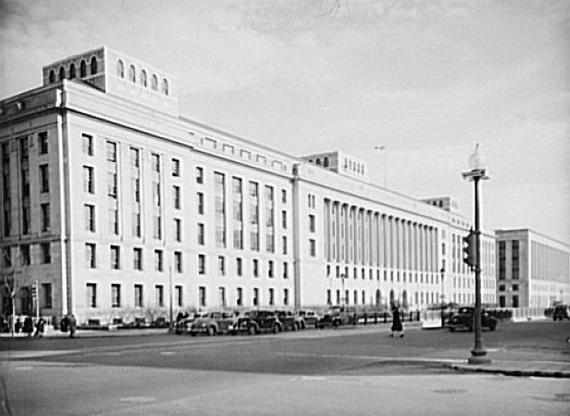
The Department of Agriculture, South Building was designed by the Office of the Supervising Architect of the Treasury, and erected between 1930 and 1936 to provide laboratory and office space. The building had 4,500 rooms, seven miles of corridors, 12 million bricks, and 11,000 miles of structural steel. Despite its enormity, the building was intended to occupy what was clearly a subordinate position both within the Department of Agriculture complex and within the larger realm of the city’s monumental core, characterized by a predominance of monumentally scaled public buildings.

The Agriculture South Building grew out of a desire to consolidate in a single complex the myriad functions of the Department of Agriculture. The Administration Building, built in 1928- 1930, and its laboratory wings (1904-1908) had been planned in the early 1900s, as part of the 1902 Senate Park Commission. The site to the south across Independence Avenue from the Administration Building provided a logical extension of the existing USDA complex. Reflecting its location and function, it was important that the design of the South Building be physically separate and distinct, while subordinate to that of the earlier Administration Building. In order to bring its growing laboratory facilities into a modern climate, the Department sought the construction of the South Building as a simple, flexible space which could accommodate huge numbers of rooms for laboratory and office use. The first phase of construction, 1930-1932, consisted of wings 4 and 5 and the connecting segments along Independence Avenue and C Street. The second phase, begun in 1932 and completed in 1935, included all portions east and west of phase one, and occurred simultaneously to complete the building. While not technically a third phase, construction of the middle portion of wing 1 was delayed for removal of some existing buildings along 13th Street, and to include the erection of the two pedestrian bridges which link the South and Administration Buildings, but was completed in 1936.

The architectural significance of the Agriculture South Building is derived from several factors. The principal characters in the design and construction were the staff of the Treasury Department’s Office of the Supervising Architect. Unlike many other federal buildings of the period, no private architects were involved in the design process. The Office of the Supervising Architect was at the time the world’s largest and the predominant force in shaping the direction of federal architecture in Washington and throughout the nation. Louis A. Simon was Chief of the Architectural Division of the Office of the Supervising Architect from 1905 until 1934 when he became the Supervising Architect. He replaced the layman, James Wetmore, who had held the title of Acting Supervising Architect since 1915. Simon is credited with responsibility for the design. Simon also designed the Internal Revenue Building (1930-1935), which is the only building within the Federal Triangle complex not designed by architects in private practice.

The building is one of an impressive number of major federal buildings designed in the Stripped Classic style which flourished in the 1930s. The style is alternately referred to as starved classicism, Depression Modern, and WPA Modern. The building’s style was influenced by the Office of the Supervising Architect and by the Commission of Fine Arts, which was responsible for reviewing and commenting on plans in the District of Columbia. The style was grounded in a reinterpretation of classical formulas, but also offered a departure from the Beaux Arts and Neoclassical styles of earlier in the century, although it remains identified with components of the Neoclassical style. The style was largely developed by private architects and fostered by a government client, and assumed a strong, if not exclusive, association with federal architecture. The Stripped Classic style had a major impact in reshaping Washington in the 1930s up to the time of World War II.

Among Washington’s federal buildings of the period, Agriculture South is of special interest for its unusual variety and application of materials; variegated brick, limestone, glazed terracotta, and cast and wrought iron occur in combination. The varied use of materials in the Agriculture South Building sets it apart from many other federal projects of the period and was probably something of an experimental application on a building intended to appear as a subordinate element of an Executive Department building complex.

Interior materials are also somewhat unusually applied; they include a variety of polychrome ceramic floor tile and natural finished wood doors and frames. Except at the auditorium, and consistent with the precepts of the Stripped Classic style, minimal architectural embellishment was applied at the interior. Although intended as a design with restraint, the system of double-loaded corridors occurring at right angles to the head house and tail house, provides almost no diversion from a rigidly orthogonal grid plan, and a seemingly infinite repetition of spaces and details. Even the entrance lobbies are held in check so as not to disrupt the pattern of corridors. Only the auditorium and library deviate from this plan by being isolated and projected into two of the courts; the recently constructed cafeteria has been introduced into a third court. As with many other federal buildings of the period, the interior was designed to permit the future flexibility of spaces and their functions.

While no historical events of singular importance are known to be associated with this building, its broader association with the growth of the Department of Agriculture is significant. Between the two World Wars, Washington was transformed by the rapid growth of the federal government. The concurrent demand for buildings to house these federal workers resulted in the vastly scaled building program conducted by the Office of the Supervising Architect. Through the 1950s, the South Building continued to function in the capacity for which it was originally intended; the removal of laboratory functions to the Department’s Beltsville, Maryland, facility has left the building exclusively occupied by offices.

Of limited technological significance is the pneumatic tube system installed originally for mail delivery. Three “tube rooms” were located at each floor, one each at the north ends of Wings 2, 4, and 6, where mail was sorted and distributed.

Building Facts

  • Architect: Louis A. Simon
  • Construction Date: 1930-1936
  • Architectural Style: Neoclassicism
  • GSA Building Number: DC0005ZZ
  • Landmark Status: Listed in the National Register of Historic Places


Print Page Email Page
Last updated: Jan 6, 2026
Top

Home

  • Resources for …
    • Americans with Disabilities
    • Citizens and Consumers
    • Federal Employees
    • GSA Employees
    • Native American affairs
    • Presidential & Congressional Commissions, Boards or Small Agencies
    • Small Business
  • Governmentwide Initiatives
    • Centers of Excellence
    • Digital experience
    • Emergency response
    • Federal Cybersecurity
    • ID, Credentials, and Access Management
    • Information Quality
    • Open Data
    • Technology Modernization Fund
  • Contact Us
  • Organization
    • Leadership Directory
    • Staff Directory
  • References
    • Annual reports
    • Plain Language
    • Budget and Performance
    • Catalogs
    • Orders & Directives
    • Forms
  • Website Information
    • A-Z Index
    • Report a website issue
    • Sitemap
  • Also of Interest
    • Data.gov
    • Whitehouse.gov
  • Tools
    • eBuy
    • eLibrary
    • Contracting forecast tool
    • GSA Advantage
    • GSA Auctions
GSA logo
  • Facebook
  • X
  • LinkedIn
  • YouTube
  • instagram
  • Blog
  • email

JOIN THE CONVERSATION

GSA.gov

An official website of the U.S. General Services Administration

  • Accessibility statement
  • Website Policies
  • Reports
  • Office of the Inspector General
  • No FEAR Act
  • FOIA Requests
  • Board of Contract Appeals
Looking for U.S. government information and services?
Visit USA.gov

PER DIEM LOOK-UP

1 Choose a location

Error, The Per Diem API is not responding. Please try again later.

No results could be found for the location you've entered.

Get my location

OR

OR

Rates for Alaska, Hawaii, and U.S. territories and possessions are set by the Department of Defense.

Rates for foreign countries are set by the Department of State.

2 Choose a date


OR

Rates are available between 10/1/2023 and 09/30/2026.

The End Date of your trip can not occur before the Start Date.


Additional terms and conditions

Traveler reimbursement is based on the location of the work activities and not the accommodations, unless lodging is not available at the work activity, then the agency may authorize the rate where lodging is obtained.

Unless otherwise specified, the per diem locality is defined as "all locations within, or entirely surrounded by, the corporate limits of the key city, including independent entities located within those boundaries."

Per diem localities with county definitions shall include"all locations within, or entirely surrounded by, the corporate limits of the key city as well as the boundaries of the listed counties, including independent entities located within the boundaries of the key city and the listed counties (unless otherwise listed separately)."

When a military installation or Government - related facility(whether or not specifically named) is located partially within more than one city or county boundary, the applicable per diem rate for the entire installation or facility is the higher of the rates which apply to the cities and / or counties, even though part(s) of such activities may be located outside the defined per diem locality.