Countdown to America's 250th Anniversary: 154 days

close

An official website of the United States government

Here’s how you know

Official websites use .gov
A .gov website belongs to an official government organization in the United States.

Secure .gov websites use HTTPS
A lock ( Lock A locked padlock ) or https:// means you’ve safely connected to the .gov website. Share sensitive information only on official, secure websites.

GSA 250 year anniversary logo and seal U.S. General Services Administration
    • Explore buy through us
    • Category management
    • Government property for sale or lease
      Toggle submenu
      • Personal property (tangible goods)
      • Real property (real estate and buildings) for public use
      • Vehicle sales
    • Products and services
      Toggle submenu
      • Human capital
      • Industrial products and services
      • Office management
      • Professional services
      • Security and protection
      • Transportation and logistics services
    • Purchasing programs
      Toggle submenu
      • Assisted acquisition
      • Commercial platforms
      • Federal strategic sourcing initiative
      • Fleet management
      • Governmentwide acquisition contractors
      • HCaTS and HCaTS SB
      • Multiple award schedule, or MAS
      • OASIS and OASIS SB
      • Requisition programs
      • State and local programs
      • Emergency acquisition basic ordering agreements
    • Shared services
      Toggle submenu
      • Payroll services
      • Support services for CABs

    Featured Topics

    • Auctions Federal assets available via auction to the general public.
    • Explore sell to government
    • Step 1: Learn about government contracting
      Toggle submenu
      • Ways you can sell to government
      • How to access contract opportunities
      • Conduct market research
    • Step 2: Compete for a contract
      Toggle submenu
      • Register your business
      • Certify as a small business
      • Become a schedule holder
      • Market your business
      • Research active solicitations
      • Respond to a solicitation
      • What to expect during the award process
    • Step 3: Manage your contract
      Toggle submenu
      • Comply with contractual requirements
      • Handle contract modifications
      • Monitor past performance evaluations

    Featured Topics

    • Contract opportunities on SAM.gov Search current federal contract opportunities and procurement notices.
    • Forecast of contracting opportunities Anticipated contracts offered by GSA.
    • Vendor support center Research the federal market, report sales, and upload contract information.
    • Explore real estate
    • Assets identified for accelerated disposition
    • Child care services
      Toggle submenu
      • Find a child care center
    • Explore historic buildings
      Toggle submenu
      • Explore by architectural style
      • Explore by timeline
      • Find a historic building
    • Leasing
      Toggle submenu
      • Leasing guidance
      • Leasing tools
    • Occupancy Agreement Space Inventory System, or OASIS
    • Reimburseable services program
      Toggle submenu
      • eRETA RWA customer portal
      • eRETA user account request process
    • Water quality management
    • Workplace optimization
      Toggle submenu
      • Answers to FAQs about Space Match
      • Commercial coworking
      • Offerings
      • Space Match
    • USE IT Act and occupancy data
      Toggle submenu
      • Playbook: Federal daily check-in survey
      • Playbook: Laptop occupancy data

    Featured Topics - Real Estate

    • Real property disposal Dispose or acquire excess federal real property including buildings or land.
    • Explore policy and regulations
    • Acquisition policy
    • Aviation management policy
    • Federal Advisory Committee Act management
    • Information technology policy
    • Real property management policy
    • Travel management policy
    • Regulations
      Toggle submenu
      • Federal acquisition regulations
      • Federal management regulations
      • Federal travel regulations

    Featured Topics

    • Forms Search for a government form.
    • Per diem FAQs Frequently asked questions about per diem rates and related topics.
    • Explore small business
    • Small business goals
    • Register your business
      Toggle submenu
      • Explore business models
      • Research the federal market
      • Subcontracting and other partnerships
    • Forecast of contracting opportunities
    • Small business resources
      Toggle submenu
      • Small business contacts
      • Videos

    Featured Topics

    • Forecast tool Information on planned federal contracting opportunities.
    • Socio economic categories Check your eligibility for small-business set-asides.
    • Training resources Suggested training for doing business with us.
    • Explore travel
    • Plan a trip
      Toggle submenu
      • Per diem rates
      • Transportation (airfare rates, POV rates, etc.)
      • Lodging
      • Travel charge card
    • Travel and lodging services
      Toggle submenu
      • E-gov travel service (ETS)
      • Rideshare
      • Travel category schedule
    • Federal travel regulation

    Featured Topics

    • Per diem rates look-up Allowances for lodging, meal and incidental costs while on official government travel.
    • Mileage reimbursement rates Reimbursement rates for the use of your own vehicle while on official government travel.
    • Explore technology
    • Purchasing programs
      Toggle submenu
      • Cloud computing services
      • Cybersecurity products and services
      • Governmentwide acquisition contracts
      • MAS information technology
      • USAccess
    • Government initiatives
      Toggle submenu
      • Artificial Intelligence
      • Cybersecurity
      • Emerging citizen technology
      • FedRAMP
      • Federal identity, credentials, and access management
      • Robotic process automation community
      • Technology modernization fund
    • Training

    Featured Topics

    • Challenge.gov Government sponsored challenges and prize competitions.
    • Data.gov Access U.S. government data.
    • Multiple award schedule IT category Information technology products, services and solutions.
    • Explore about us
    • Background and history
      Toggle submenu
      • Overview
      • Mission and strategic goals
      • Role in presidential transitions
    • Careers
      Toggle submenu
      • Get an internship
      • Launch your career
      • Elevate your professional career
      • Discover special hiring paths
      • Resources and related links
    • Events and training
      Toggle submenu
      • Events, training, and request a speaker
      • Our training programs
    • Newsroom
      Toggle submenu
      • Agency blog
      • Congressional testimony
      • GSA does that podcast
      • News releases
      • Speeches
      • Videos
    • Organization
      Toggle submenu
      • Leadership directory
      • Federal Acquisition Service
      • Public Buildings Service
      • Staff offices
    • Contact us

    Featured Topics

    • Blog Read the latest GSA news, updates and analysis.
    • Careers Learn what we have to offer.
  • Per diem lookup
Buy through us
Explore buy through us
Category management
Government property for sale or lease
Personal property (tangible goods)
Real property (real estate and buildings) for public use
Vehicle sales
Products and services
Human capital
Industrial products and services
Office management
Professional services
Security and protection
Transportation and logistics services
Purchasing programs
Assisted acquisition
Commercial platforms
Federal strategic sourcing initiative
Fleet management
Governmentwide acquisition contractors
HCaTS and HCaTS SB
Multiple award schedule, or MAS
OASIS and OASIS SB
Requisition programs
State and local programs
Emergency acquisition basic ordering agreements
Shared services
Payroll services
Support services for CABs
Sell to government
Explore sell to government
Step 1: Learn about government contracting
Ways you can sell to government
How to access contract opportunities
Conduct market research
Step 2: Compete for a contract
Register your business
Certify as a small business
Become a schedule holder
Market your business
Research active solicitations
Respond to a solicitation
What to expect during the award process
Step 3: Manage your contract
Comply with contractual requirements
Handle contract modifications
Monitor past performance evaluations
Real estate
Explore real estate
Assets identified for accelerated disposition
Child care services
Find a child care center
Explore historic buildings
Explore by architectural style
Explore by timeline
Find a historic building
Leasing
Leasing guidance
Leasing tools
Occupancy Agreement Space Inventory System, or OASIS
Reimburseable services program
eRETA RWA customer portal
eRETA user account request process
Water quality management
Workplace optimization
Answers to FAQs about Space Match
Commercial coworking
Offerings
Space Match
USE IT Act and occupancy data
Playbook: Federal daily check-in survey
Playbook: Laptop occupancy data
Policy and regulations
Explore policy and regulations
Acquisition policy
Aviation management policy
Federal Advisory Committee Act management
Information technology policy
Real property management policy
Travel management policy
Regulations
Federal acquisition regulations
Federal management regulations
Federal travel regulations
Small business
Explore small business
Small business goals
Register your business
Explore business models
Research the federal market
Subcontracting and other partnerships
Forecast of contracting opportunities
Small business resources
Small business contacts
Videos
Travel
Explore travel
Plan a trip
Per diem rates
Transportation (airfare rates, POV rates, etc.)
Lodging
Travel charge card
Travel and lodging services
E-gov travel service (ETS)
Rideshare
Travel category schedule
Federal travel regulation
Technology
Explore technology
Purchasing programs
Cloud computing services
Cybersecurity products and services
Governmentwide acquisition contracts
MAS information technology
USAccess
Government initiatives
Artificial Intelligence
Cybersecurity
Emerging citizen technology
FedRAMP
Federal identity, credentials, and access management
Robotic process automation community
Technology modernization fund
Training
About us
Explore about us
Background and history
Overview
Mission and strategic goals
Role in presidential transitions
Careers
Get an internship
Launch your career
Elevate your professional career
Discover special hiring paths
Resources and related links
Events and training
Events, training, and request a speaker
Our training programs
Newsroom
Agency blog
Congressional testimony
GSA does that podcast
News releases
Speeches
Videos
Organization
Leadership directory
Federal Acquisition Service
Public Buildings Service
Staff offices
Contact us
  1. Home
  2. Real estate
  3. Explore historic buildings
  4. Find a Building
  5. Federal Building, Minneapolis, MN

Paul D. Wellstone Federal Building, Minneapolis, MN

Location: 212 3rd Ave S, Minneapolis, MN 55415

undefined

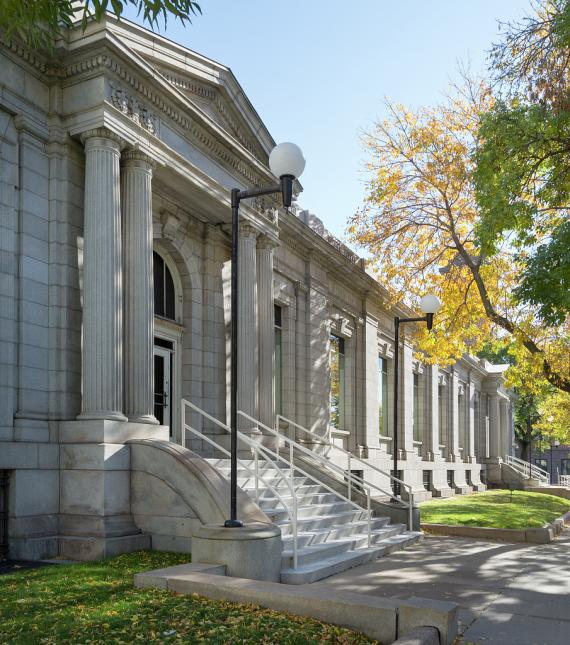
The Federal Building in downtown Minneapolis, Minnesota, is of historical significance for its contribution to the community of Minneapolis and of architectural significance for its original design and the overall integrity of its exterior.

The history of the Federal Building, originally constructed as a post office, can be traced back to the 1880’s. The 1880s were a period of rapid growth for Minneapolis, marked by a construction boom in the downtown area. The boom was also reflected in the population of the city; it doubled during this decade. As a result, the four-story, Romanesque style building, built in 1889, which housed the post office, U.S. District Court and numerous federal offices became inadequate in size. Planning for a new post office facility began, and in 1907, the block bounded by Washington Avenue, Second Street, and Second and Third Avenues South was purchased and cleared for construction of a new postal facility. The site selection was unpopular as the area was occupied by retail and wholesale establishments and manufacturing concerns relating to the freight depot for the Chicago, Milwaukee, and St. Paul Railroad.

Presentation drawings for the building were completed in July 1909 under the direction of James Knox Taylor, the supervising architect for the U.S. Treasury Department. The drawing depicted a two-story, neo-classical structure with a hipped copper roof. This design is similar to the appearance of the final construction; however, the main elevation of the building was orientated to Washington Avenue rather than Third Avenue South. This orientation was probably selected initially because the tracks of the Twin City Rapid Transit streetcar line ran along Washington Avenue, and at this time Third Avenue South dead-ended at the Mississippi River.

A set of construction drawings based upon this design was completed in 1910. While the building remained oriented toward Washington Avenue, a third story had been added to the design. In 1911 and 1912, a second set of construction drawings was executed which changed the orientation to Third Avenue South, facing away from the downtown area and toward the freight terminal. This was apparently the direct result of lobbying by city officials. This decision, coupled with the initial unhappiness over the selection of the site itself, proved to be a source of continuing displeasure to the people of Minneapolis.

Construction was begun in 1912 and proceeded until early in 1915. During the course of construction, numerous design changes were made. On the exterior, various “improvements” were designed as additions to the original contract. These included adding porticos and curved support walls to the entrances on Second Street and Washington Avenue and constructing a one-story, stone-faced wall enclosing the area adjacent to the rear mailing platform. On the inside, the “betterments” included the addition of mosaic tile floors, marble floor and wall trim and “imitation caen stone” wall surfaces in the vestibules and corridors. The new post office was officially opened with a flag raising ceremony on January 18, 1915. The building had been completed at a total cost of $1,267,162 which included the land, building and equipment.

The postal service continued to expand its services and staff after moving into the new building. In February 1926, plans were announced for an extensive renovation and four-story addition to the existing facility. The plans called for the demolition of the existing 1889 Federal Building with all federal offices and courts to be housed in the new space created at the post office. A $2,000,000 appropriation passed the Senate on February 17, 1926, having previously been passed in the House. However, by 1929, political forces in the city had begun a drive for the construction of a totally new postal facility with the federal offices and courts being relocated to the renovated 1915 post office building. This plan raised an immediate uproar from the judges of the Federal Circuit and District courts, who had no intention of being relocated from admittedly cramped and dilapidated quarters in a suitably located building to quarters of unknown quality located in a building in what had become a decaying part of the city. In June 1930, the judges announced their consideration of a renewed campaign for the construction of a new federal building, in light of continuing plans by the federal government to renovate the post office. Ultimately, it was decided to go ahead with construction of the new post office and leave disposition of the present post office for consideration at a later date.

Construction of a new post office facility was begun in 1933. In July 1933, it was revealed that the federal government was considering the demolition of either the 1915 Post Office or the 1889 Federal Building as a means of obtaining land for the construction of a new federal office and courts building. The new post office facility was dedicated on September 20, 1934; the postal service vacated the 1915 building and moved to the new facility in March of 1935. In October of 1935, plans were announced that the 1915 post office would be remodeled to house federal offices other than the courts, with the court-related activities remaining in the 1889 building. Construction documents were completed in early 1936 under the direction of Louis A. Simon, the Supervising Architect of the U.S. Treasury Department. The construction, at a contracted cost of $43,725, began in June of 1936. The bulk of the work reconfigured the first floor with the creation of two large light wells and a new circulation system. The new occupants, primarily the Internal Revenue Service and the recruitment offices for the various branches of the armed forces, moved into the building in January 1937. 

In the 1960s and early 1970s, the presence of those very same tenants resulted in renewed public awareness of the building, as it became the focus of local anti-war demonstrations against the I.R.S., the armed forces, and Vice President Hubert H. Humphrey, a Minnesota native. In August 1970, an explosion caused extensive damage to the building in the vicinity of the Second Street entrance.

Building Facts

  • Architect: James Knox Taylor
  • Construction Dates: 1912-1915
  • GSA Building Number: MN0036ZZ
  • Landmark Status: Listed in the National Register of Historic Places
Print Page Email Page
Last updated: Aug 18, 2025
Top

Home

  • Resources for …
    • Americans with Disabilities
    • Citizens and Consumers
    • Federal Employees
    • GSA Employees
    • Native American affairs
    • Presidential & Congressional Commissions, Boards or Small Agencies
    • Small Business
  • Governmentwide Initiatives
    • Centers of Excellence
    • Digital experience
    • Emergency response
    • Federal Cybersecurity
    • ID, Credentials, and Access Management
    • Information Quality
    • Open Data
    • Technology Modernization Fund
  • Contact Us
  • Organization
    • Leadership Directory
    • Staff Directory
  • References
    • Annual reports
    • Plain Language
    • Budget and Performance
    • Catalogs
    • Orders & Directives
    • Forms
  • Website Information
    • A-Z Index
    • Report a website issue
    • Sitemap
  • Also of Interest
    • Data.gov
    • Whitehouse.gov
  • Tools
    • eBuy
    • eLibrary
    • Contracting forecast tool
    • GSA Advantage
    • GSA Auctions
GSA logo
  • Facebook
  • X
  • LinkedIn
  • YouTube
  • instagram
  • Blog
  • email

JOIN THE CONVERSATION

GSA.gov

An official website of the U.S. General Services Administration

  • Accessibility statement
  • Website Policies
  • Reports
  • Office of the Inspector General
  • No FEAR Act
  • FOIA Requests
  • Board of Contract Appeals
Looking for U.S. government information and services?
Visit USA.gov

PER DIEM LOOK-UP

1 Choose a location

Error, The Per Diem API is not responding. Please try again later.

No results could be found for the location you've entered.

Get my location

OR

OR

Rates for Alaska, Hawaii, and U.S. territories and possessions are set by the Department of Defense.

Rates for foreign countries are set by the Department of State.

2 Choose a date


OR

Rates are available between 10/1/2023 and 09/30/2026.

The End Date of your trip can not occur before the Start Date.


Additional terms and conditions

Traveler reimbursement is based on the location of the work activities and not the accommodations, unless lodging is not available at the work activity, then the agency may authorize the rate where lodging is obtained.

Unless otherwise specified, the per diem locality is defined as "all locations within, or entirely surrounded by, the corporate limits of the key city, including independent entities located within those boundaries."

Per diem localities with county definitions shall include"all locations within, or entirely surrounded by, the corporate limits of the key city as well as the boundaries of the listed counties, including independent entities located within the boundaries of the key city and the listed counties (unless otherwise listed separately)."

When a military installation or Government - related facility(whether or not specifically named) is located partially within more than one city or county boundary, the applicable per diem rate for the entire installation or facility is the higher of the rates which apply to the cities and / or counties, even though part(s) of such activities may be located outside the defined per diem locality.