Three GSA high-performance buildings that have achieved remarkable results across all measures assessed in this study are highlighted below. These facilities demonstrate the impact of leveraging various funding sources—including performance contracts, appropriated funds, and grants—with integrated design and operational strategies to achieve measurable performance improvements. Through these strategies, GSA has achieved lower operating costs and consistent high performance on energy and water use, tenant satisfaction, and waste diversion — even at facilities with unique requirements like land ports of entry (LPOEs).
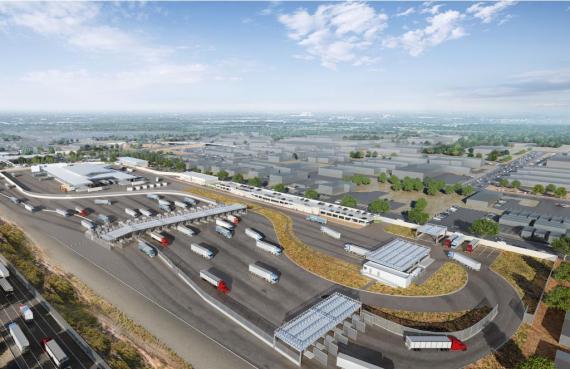
Otay Mesa LPOE, California
GSA completed a new construction and major modernization project at the Otay Mesa border crossing in California. Completed in October 2023, this project demonstrates how strategic funding and thoughtful planning can transform a government facility into a top performer, saving approximately $228,000 each year in energy costs.
The Otay Mesa project had two main parts:
- A brand-new Commercial Annex Building, built using appropriated funding
- Renovations to existing facilities, funded through public-private partnerships
GSA’s goal was simple: make the new building use 30% less energy than a typical baseline building (GSA’s standard requirement for new construction per federal law), and generate additional savings through renovations.
Going above and beyond
GSA didn’t just meet this goal—we exceeded it. The new Commercial Annex Building produces almost as much energy as it uses. This is a huge achievement for any building, especially one that operates 24/7. The team also prepared the facility for the future by installing the basic infrastructure needed to add more energy-saving or distributed energy generation technology later, when funding becomes available.
Smart partnerships save money
Using a UESC, GSA leveraged third-party financing to fund additional improvements:
- New heating and cooling systems
- Energy-efficient outdoor lighting
- Solar panels to offset building energy usage
This financing model allows GSA to make improvements now and pay for them over time out of the savings generated from reduced energy costs.
Real results
All these improvements add up to big savings:
- The facility saves approximately $228,000 on annual energy costs
- Despite the addition of 120,000 GSF from the new Commercial Annex Building, the total campus energy use was down by 2.6% in FY24, compared to a FY19 baseline.
Why this matters
The Otay Mesa project shows what’s possible when teams work together and think creatively about funding. Combining appropriated funds with alternative financing, GSA transformed one of America’s busiest border crossings into an energy-efficient facility — a modern border station that will serve both U.S. national security and international commerce for decades to come. This project proves that government buildings can be both highly functional and environmentally responsible—saving taxpayer money while reducing our environmental impact and meeting the mission-critical requirements of our tenant agencies.
Oklahoma City Federal Building
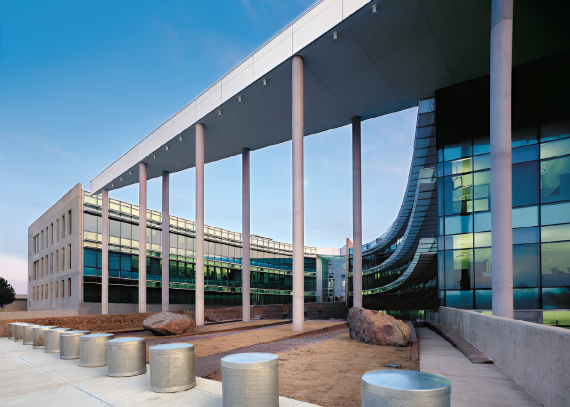
The Oklahoma City Federal Building stands as a national symbol of strength and resilience. Built to replace the facility destroyed in the 1995 terrorist attack, the building prioritizes security while maintaining an open and accessible image consistent with our nation’s principles of constitutional representative self-governance. At 178,000 square feet, the building’s size is typical of the GSA inventory, and it houses multiple agencies including the Department of the Army, Housing and Urban Development, and the Social Security Administration. Like many federal buildings, after decades of operation, the Oklahoma City Federal Building needed upgrades to reduce energy costs and improve efficiency.
A smart partnership
In 2024, GSA completed a major modernization through a performance contract with local energy service company Ameresco and local utility Oklahoma Gas to reduce energy and water consumption, produce on-site power, and improve grid stability with energy storage. GSA entered into a creative public-private partnership using an Energy Performance Contract (EPC) to transform the OKC building into a high performance, grid interactive building. This agreement enabled GSA to complete building improvements with minimal upfront taxpayer dollars. The majority of the project funding was privately financed, combined with an additional $3.5 million dollar grant from the Department of Energy.
Building upgrades
Major improvements included:
- New heating and cooling controls
- LED lights with smart controls
- High-efficiency electrical transformers
- Water-saving upgrades
- A 300 kilowatt on-site electric power system
- A large battery system that stores electricity, promotes grid stability, and saves money
Demand load management for reliability and cost savings
The battery system is especially important. It can:
- Reduce or avoid costly electricity peak demand-related charges
- Keep the building running during power outages
- Reduce strain on the local power grid during hot summer days
- Support grid-interactive efficient building technologies
- Help prevent citywide blackouts
While this Oklahoma City Federal Building received the majority of the total $14.6 million invested through the UESC, four other GSA facilities were also upgraded. Based on performance to date, GSA projects that over the full 23 years of the contract, it will result in total cost avoidance (from utilities and O&M expenses) of $14.5 million, meaning that this contract will deliver all of the capital upgrades described above for almost no net cost — while reducing energy and water use by 41% and 13%, respectively.
National recognition
The Department of Energy recognized this project’s excellence with a 2023 Federal Energy and Water Management Award. This project shows how federal buildings can lead the way in high performance while securely maintaining critical government services for the American people.
Wayne Aspinall Federal Building and US Courthouse: A performance story that keeps getting better
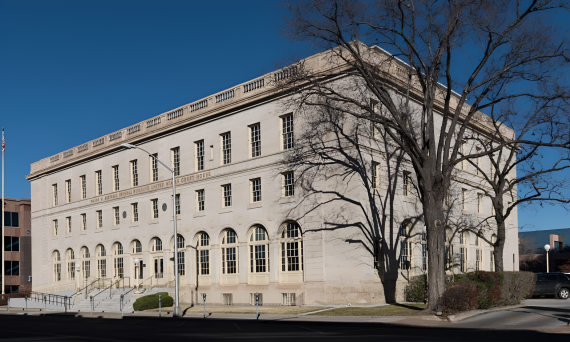
The Wayne Aspinall Federal Building in Colorado proves that historic buildings can be performance stars. Built in 1918, this beautiful three-story courthouse received a $15 million full modernization in 2013.
A historic first
This renovation made history. The Wayne Aspinall Federal Building is:
- The first GSA historic building renovation designed to produce all its own energy (net-zero on a source-basis)
- One of the most energy-efficient buildings in GSA’s portfolio
- A model for preserving history while embracing the future
Smart use of natural light
The building’s biggest success comes from using daylight to reduce reliance on electric lights. The design team strategically capitalized on the historic building’s large preexisting windows. Here’s how it works:
- Sensors automatically dim lighting based on ambient levels of free natural daylight
- Occupants can adjust window shades to control brightness and glare
- A new skylight above the IRS office on the first floor brings natural light deep into the building’s largest workspace
- Through careful design, 92% of workers can see outside from their desks, which studies show improves both mood and productivity.
The proof is in the numbers
The building’s performance keeps improving:
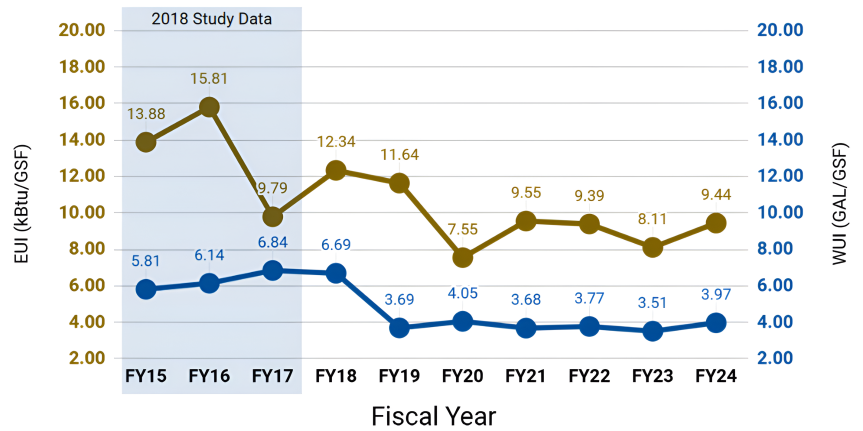
- Energy use at the Wayne Aspinall Federal Building and courthouse dropped by an impressive 41% since it was assessed in GSA’s 2018 study
- Similarly, water use also further dropped 40% since 2018
- The graph below shows the annual EUI and WUI from FY15 to FY24
Additionally, workers in the building are happier than those in most federal buildings:
- Overall TSS score: 4.1 out of 5 (compared to 3.79 for typical older buildings)
- Lighting satisfaction: 4.3 out of 5
- These satisfaction scores outperformed GSA’s average for high-performance buildings in this study
Lessons that last
Thirteen years after its renovation, Wayne Aspinall continues to excel. This success comes from the thoughtful high-performance design choices made during renovation, as well as the dedicated GSA staff who continue to operate the building efficiently.
The Wayne Aspinall Federal Building is proof that historic preservation and high performance can go hand in hand. With diligent planning and ongoing care, improvements can honor America’s traditional and classical architectural heritage while building an efficient and effective future for Federal public buildings.


 U.S. General Services Administration